


Are you considering offering reseller hosting? In this article, I dive deep into what reseller hosting is exactly, how it works, and how to make it a profitable business.
What is reseller hosting?
With reseller hosting, you sell the web hosting of an existing hosting company to your own customers.
It allows you to use the existing infrastructure of a hosting provider. That means you don’t have to worry about the technical aspects of hosting (like server maintenance, security, and software updates), and you can instead focus on sales and marketing.
The nice thing about reseller hosting is that you can operate completely under your own brand name. The end user does not need to know that another hosting company is working behind the scenes.
How does reseller hosting work?
Exactly how reseller hosting works depends on the hosting provider and the package you choose. But in general, the process looks like this:
- You purchase a hosting package from a provider that offers reseller hosting. This package includes a certain amount of storage space, bandwidth, and other resources.
- You divide these resources into smaller packages that you sell to your customers. For example, you purchase 100GB of storage space and sell it as ten packages of 10GB.
- You manage the accounts of your customers through a control panel such as DirectAdmin. With this, you can create, modify, or delete accounts.
- You provide customer service to your own customers. The main provider supports you, but you support your own customers.
- White label solutions ensure that you can offer everything under your own brand name. This way, your customers do not know that you use the infrastructure of a third party.
The pros and cons of reseller hosting
Pros
- Low startup costs. You don’t have to invest in expensive server infrastructure, data centers, or technical staff. With a small investment (say, between €5 and €50 per month), you can get started.
- Extra revenue stream. If you already offer services such as web design or SEO, hosting is a logical addition.
- Outsourced technical management. The main provider handles server maintenance, updates, and technical issues, allowing you to focus on sales and customer service.
- Growth opportunities. Start small and expand as your customer base grows. Most reseller packages are flexibly scalable.
- Full control over pricing. You determine which profit margin you apply, which packages you offer, and which additional services you add.
- You can add more value for your customers. Many of your customers come to you because they want to spend as little time and effort on their site as possible. By offering hosting, you save them even more time and effort.
Cons:
- Dependence on the provider. If your provider has issues, all your customers have issues. Your reputation stands or falls with the quality of your hosting provider.
- Responsibility for support. You are the first point of contact for your customers. This means you must be available 24/7 for technical questions and issues.
- Fierce competition. The hosting market is saturated with large and small players often working at rock-bottom prices, making it difficult to compete on price alone.
How to make reseller hosting profitable for you?
The Dutch hosting market is packed with established names and new players competing with increasingly lower prices. As a stand-alone solution, reseller hosting is often not a goldmine. The key to success lies in integrating hosting with your existing services.
Use the following tactics:
- Combine hosting with other services. Offer hosting as part of a total package. For example: website design + hosting + maintenance. This increases your value proposition and makes price comparison more difficult.
- Focus on a niche. Target a specific sector where you have expertise. For example, hosting packages specifically for law firms, dental practices, or online stores. Add industry-specific features that standard hosting providers do not offer.
- Offer premium support. Differentiate yourself by providing better service than the big players. Personal contact, fast response times, and proactive management make customers willing to pay more.
- Create maintenance packages. Offer different levels of website maintenance on top of the hosting. Consider regular WordPress updates, security scans, backups, and performance optimization.
- Invest in customer retention. Acquiring new customers is expensive. Keep your existing customers happy through regular contact, loyalty programs, and timely upgrades when they outgrow their package.
- Make your services distinctive. Add specific tools or features that make your hosting stand out, such as specialized security measures or optimizations for certain CMS systems.
- Automate where possible. Use tools to automate billing, provisioning, and basic support, so you can serve more customers without spending much more time.
This is where you can sign up for reseller hosting
The Dutch my.host is one of the best places to sign up for a reseller hosting package.
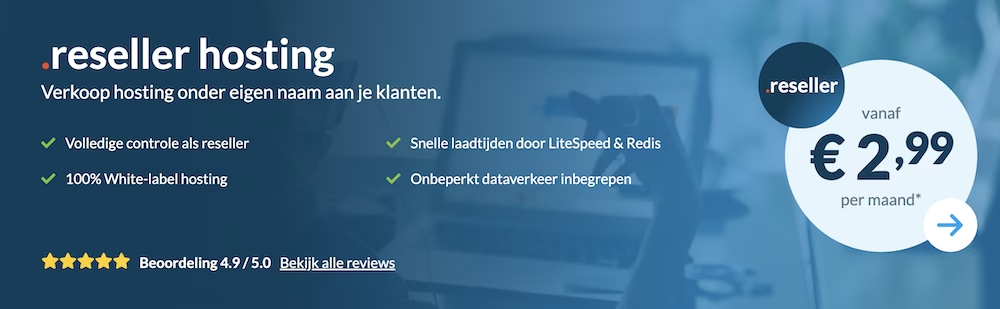
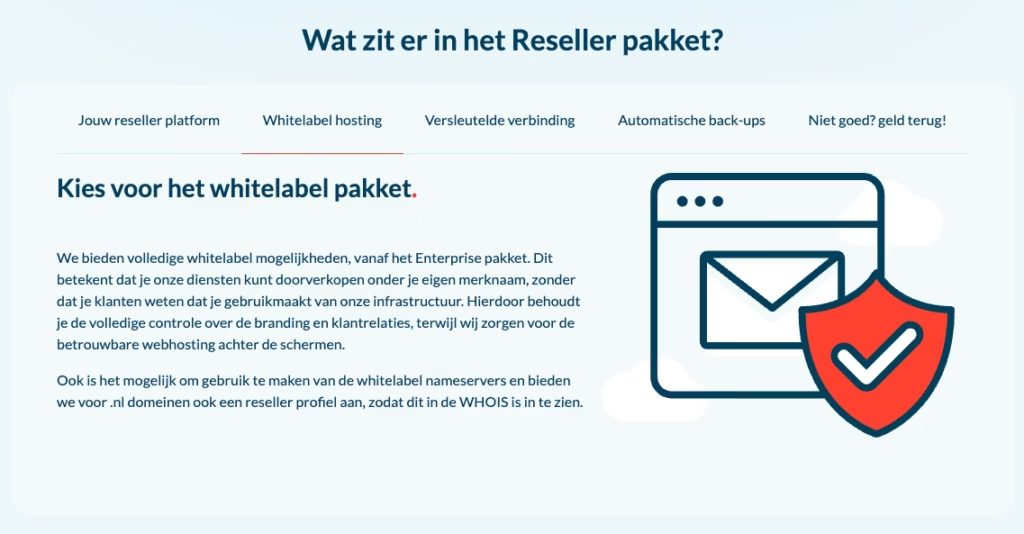
The standard reseller packages are suitable for between 50 and 150 users.
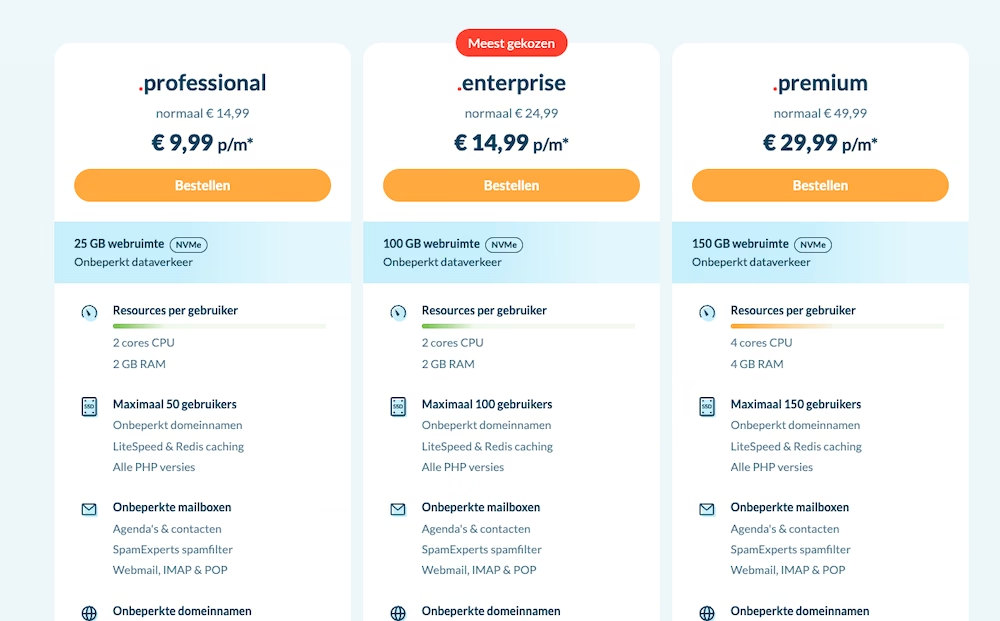
But if you want to start a bit more modestly, you can also sign up for the .business package which supports up to 10 users and is available from €2.99 per month.




Leave a Reply