
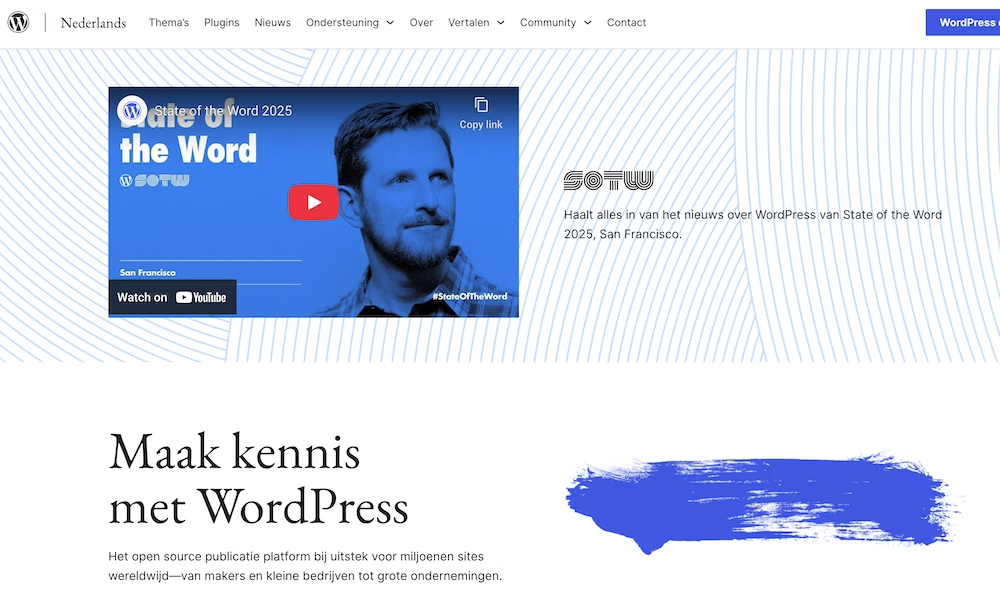

More than 43% of all websites run on WordPress. Despite this market share, there remains a persistent misconception that the CMS is only suitable for small blogs or simple business websites.
The reality in the enterprise market is different. Large multinationals, news media, and government institutions opt for WordPress.
They often use the platform in a Headless setup or heavily modified environment. The standard themes are replaced by custom solutions that integrate with complex business processes.
Are you wondering whether WordPress is a good choice for your organization? Get inspired by the companies below and their respective WordPress websites.
News and Media Organizations
Media organizations have specific requirements: high traffic volumes, editorial efficiency, and stability during peak times.
1. TechCrunch

TechCrunch publishes dozens of articles daily about the technology sector. The site handles millions of visitors per month, especially during major events or product launches.
Speed is crucial for “breaking news.” The editorial team relies on the WordPress backend for quickly entering and publishing content.
On the front end, TechCrunch often uses a decoupled architecture. This ensures that the database can handle heavy loads without readers experiencing delays.
View the TechCrunch website here.
2. Time.com
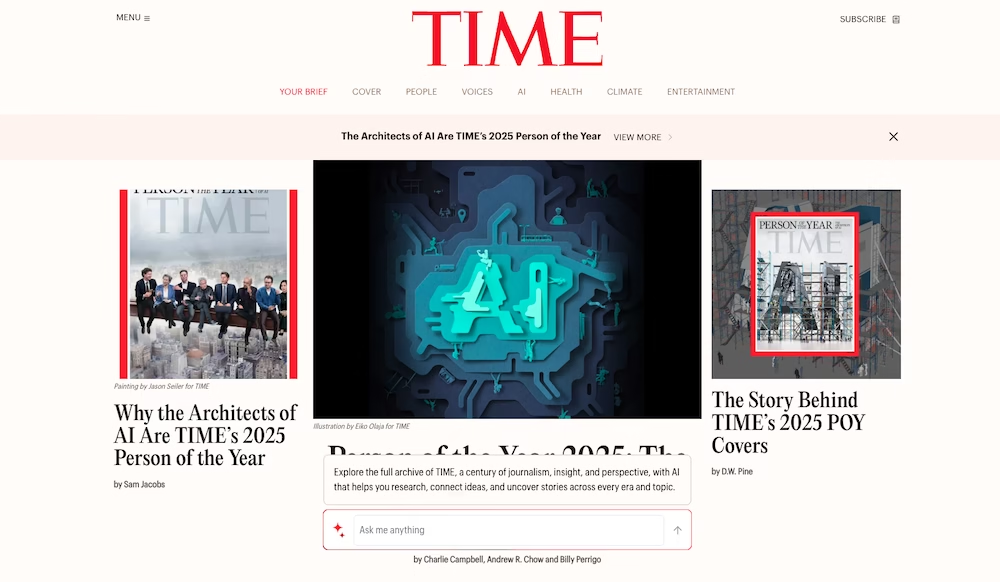
For the iconic magazine TIME, WordPress is an essential component of their online strategy.
The editorial team integrates complex multimedia elements, such as videos and high-resolution photography, directly into the articles. The CMS supports these workflows without technical intervention.
The infrastructure is set up for extreme peaks. When big news breaks, the hosting environment automatically scales to ensure uptime.
View the Time.com website here.
3. Vogue
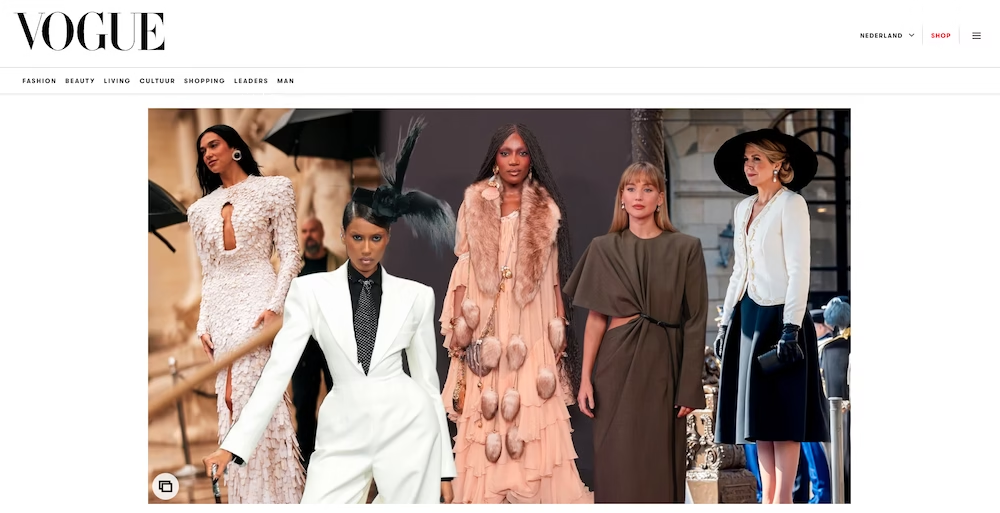
In the fashion industry, visual presentation is key. Vogue uses WordPress to provide a design-driven experience that matches their print magazine.
Visually heavy themes often negatively impact load times. Vogue optimizes this by applying strict caching and image compression.
This is a must for the Core Web Vitals scores in Google. Additionally, Vogue manages various international editions through WordPress, often from linked installations.
4. LINDA.nl (Netherlands)
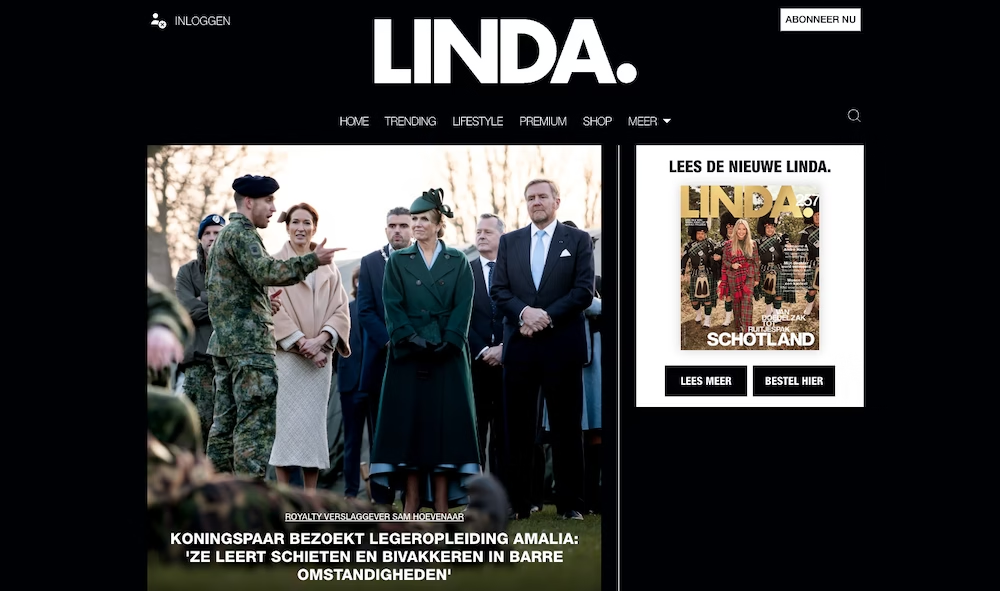
LINDA.nl is one of the largest online media platforms in the Netherlands. They use a Headless WordPress architecture.
In this setup, WordPress is purely the content engine (backend) for the editorial team. The front end that the visitor sees is built in React.
This allows LINDA to publish content super quickly. Not only on the website but also directly from the same source to their iOS and Android apps.
View the LINDA.nl website here.
Corporate & Enterprise Branding
For publicly traded companies, the website revolves around brand identity (branding), Investor Relations, and security.
5. The Walt Disney Company
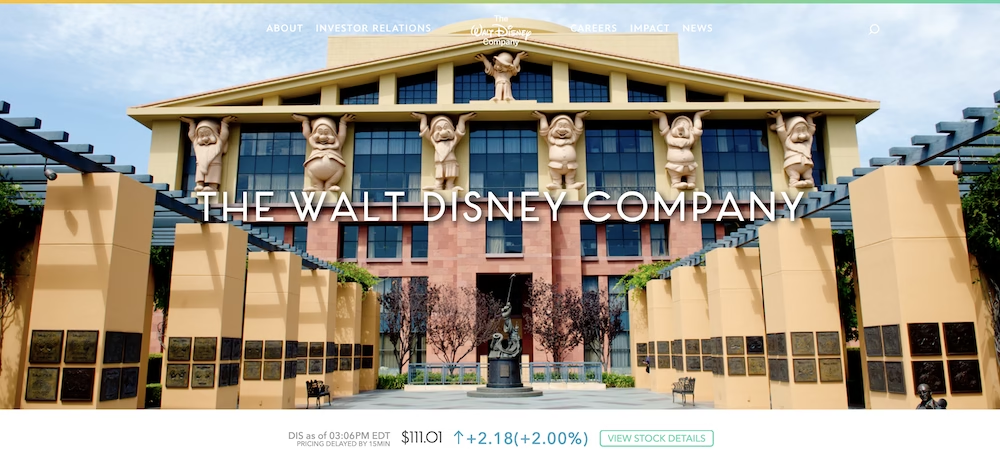
Disney’s corporate website serves as a business card for investors and the press. It features annual reports, press releases, and information about corporate responsibility.
Brand safety is the priority here. The content must be strictly controlled, and the display must be pixel-perfect on all devices.
Behind the scenes, there’s likely an Enterprise hosting cluster. This ensures maximum security against hacks and data breaches.
View The Walt Disney Company website here.
6. Sony Music
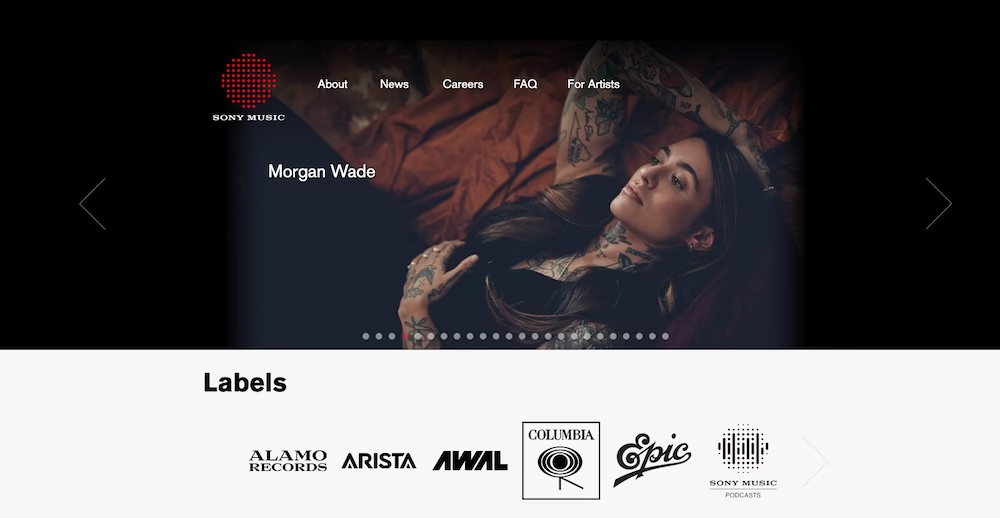
Sony Music manages hundreds of artists. Building a separate website for each artist is inefficient and expensive to maintain.
They use WordPress Multisite. This allows Sony to manage hundreds of unique sites from a single central installation.
Each artist gets their own look and feel, but the technical foundation and security updates are managed centrally. This results in significant cost savings.
View the Sony Music website here.
7. Renault Group
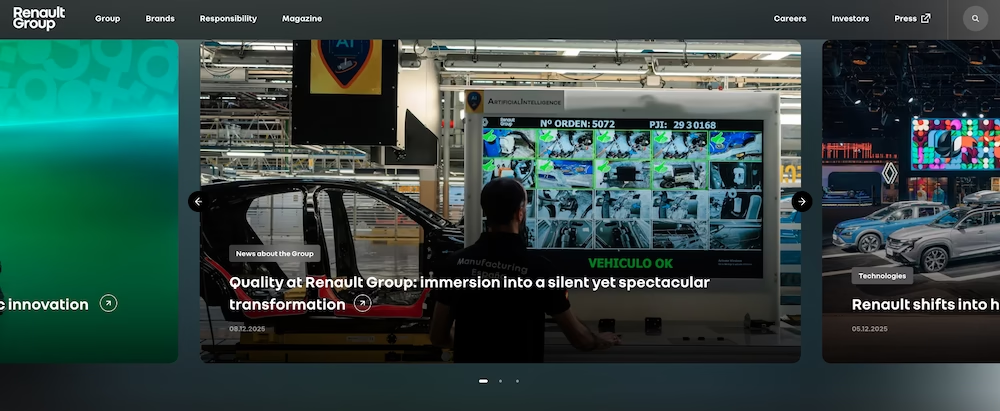
The Renault Group uses WordPress for their corporate communications. The site contains complex business information, such as innovation updates and financial results.
WordPress functions here as a Digital Asset Management (DAM) hub for the press. Journalists can easily download high-res images and press releases.
There are often integrations with external HR systems. Job vacancies are imported into WordPress, while the application process runs in specialized software.
View the Renault Group website here.
8. Action (Corporate Website – Netherlands)
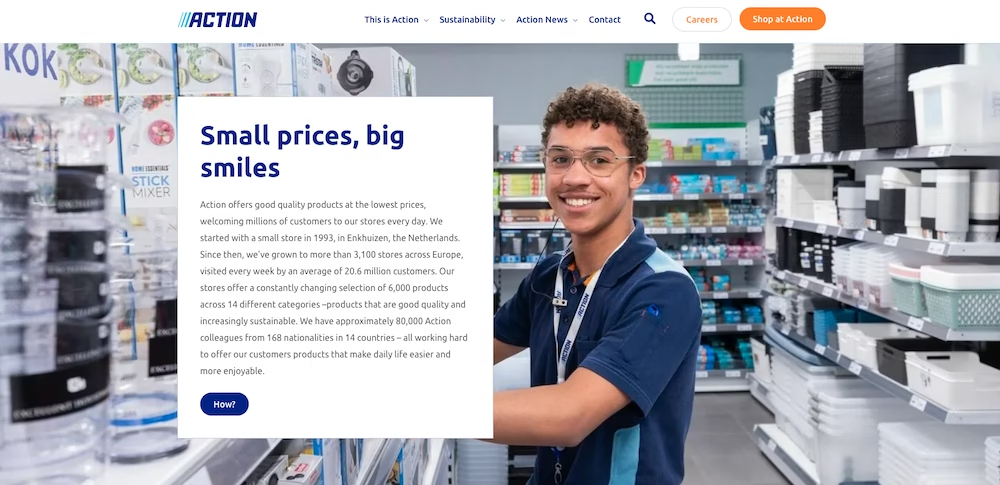
Action separates their consumer website from their corporate environment. The corporate website (about Action, sustainability, news) runs on WordPress.
The choice for WordPress in corporate communications stems from ease of use. Communication teams can independently post press releases without having to involve IT.
Financial updates or crisis communications can therefore be online within minutes. This increases the organization’s agility.
View the Action Corporate website here.
Government and Non-Profit
In this sector, priorities are digital accessibility (WCAG), privacy (GDPR), and data security.
9. The White House (whitehouse.gov)
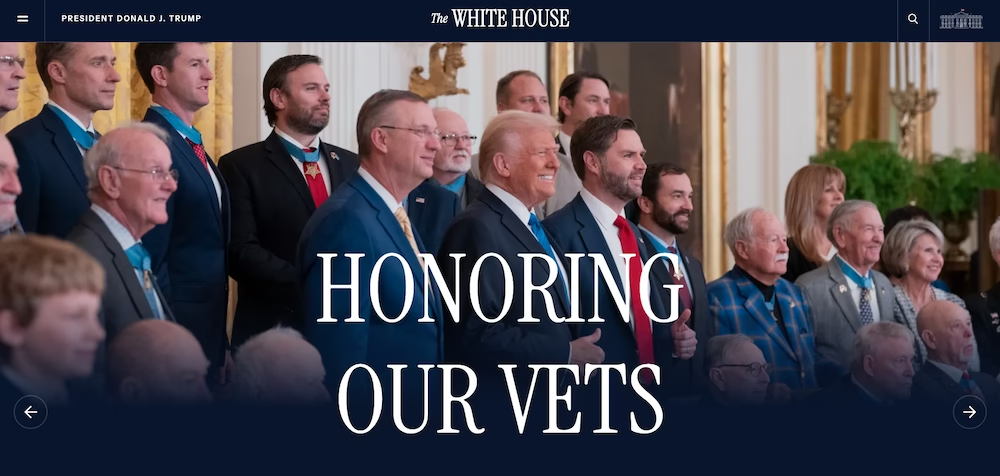
The White House website migrated from Drupal to WordPress in 2017. This speaks volumes about the security of WordPress.
Government websites must comply with strict accessibility requirements (Section 508 in the US). WordPress offers excellent support for this in the core code.
The switch resulted in savings in development costs. Additionally, communication staff could publish updates more quickly thanks to the easy-to-use backend.
View the White House website here.
10. Sweden.se (Official site of Sweden)
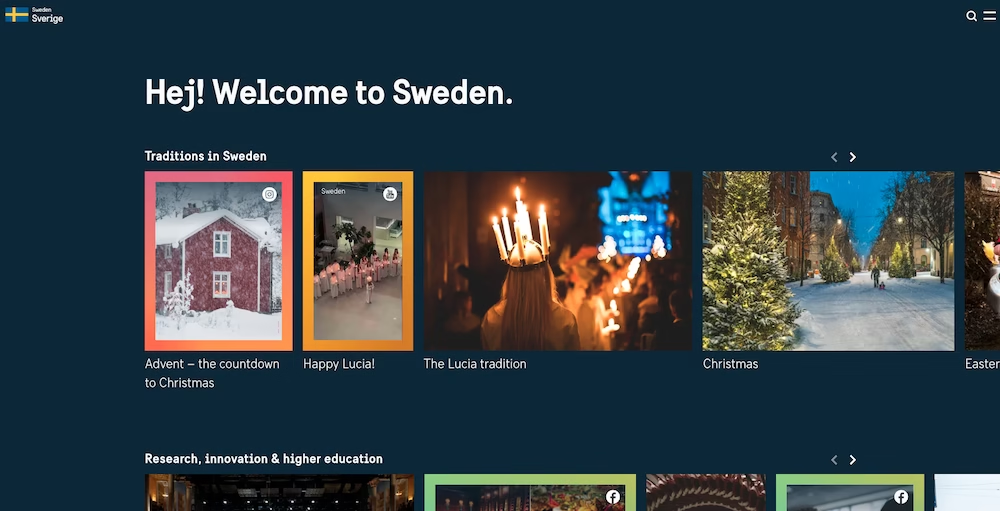
Sweden.se is the official channel for the promotion of Sweden. The site heavily relies on storytelling and visual content.
The design breaks with the traditional, sober style of government sites. WordPress provides the designers with the freedom to create modern layouts.
The site is set up to be multilingual. This requires a solid technical structure for translation management, so content remains synchronized across all languages.
View the Sweden.se website here.
11. Municipality ‘s-Hertogenbosch (and several other municipalities)
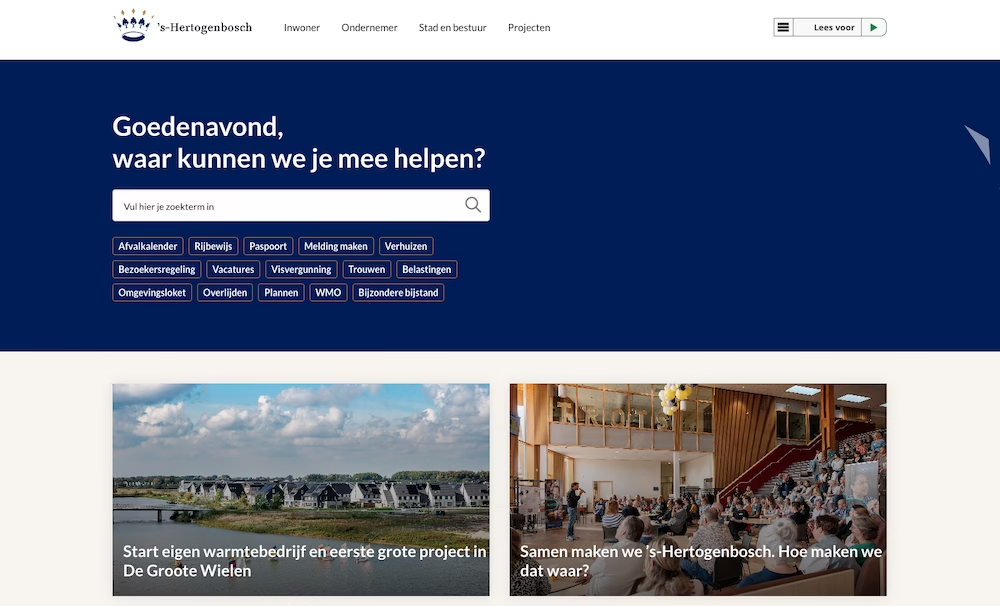
Dutch municipalities are increasingly switching to open-source software. This aligns with the “open unless” policy.
Municipal sites are often modular. Services such as civil affairs, waste calendars, and tourism are combined. WordPress facilitates this modular structure via API integrations.
Privacy is a core concern. Keeping the database under own management (instead of SaaS) allows municipalities to better comply with the GDPR legislation.
View the Municipality ‘s-Hertogenbosch website here.
Tech & Innovation
Tech companies often use WordPress for their content marketing and blogs, even if they develop software themselves.
12. Microsoft News (Stories)
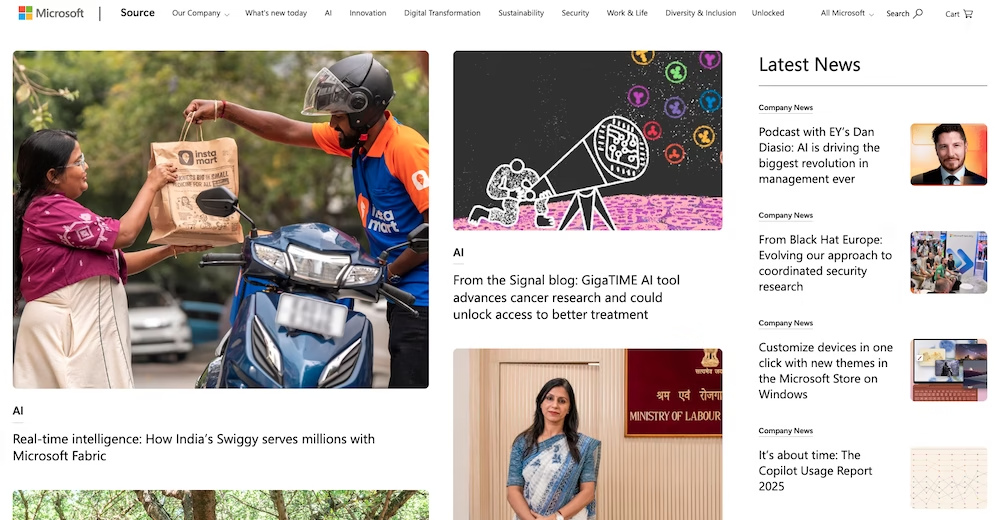
Though Microsoft is the owner of .NET technology, they use WordPress for their news and storytelling platform.
They make extensive use of the Gutenberg block editor, allowing editors to create complex layouts without programming knowledge.
View the Microsoft News website here.
13. Facebook Newsroom (Meta)
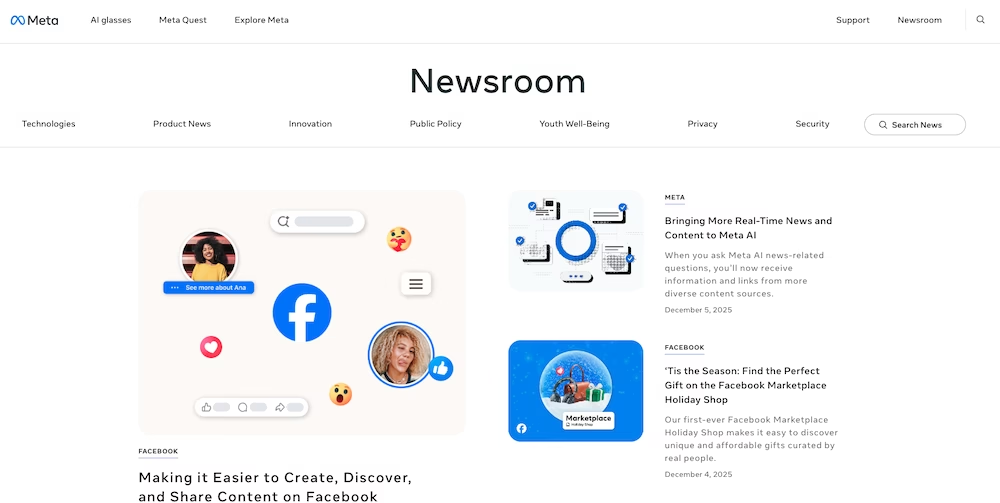
Meta (parent company of Facebook) uses WordPress for their press room. This is technically separate from the Facebook platform itself.
The choice is pragmatic. Developing a proprietary CMS for news releases consumes unnecessary time and developer resources.
View the Meta Newsroom website here.
14. cPanel Blog
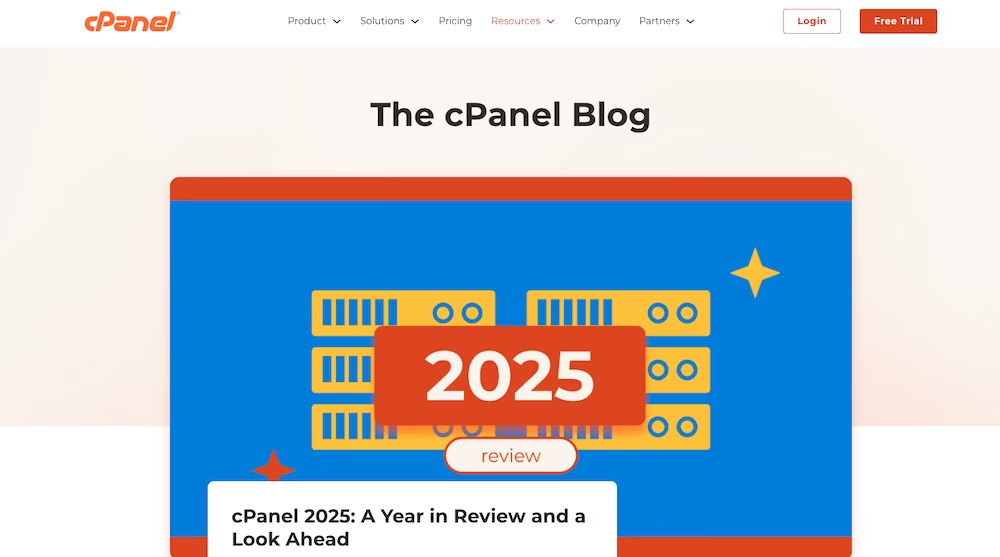
cPanel is one of the most widely used hosting panels (though you don’t find it as much among Dutch hosting providers anymore). Their own blog runs on WordPress, highlighting the integration of both technologies in the hosting world.
The blog contains a lot of technical documentation and guides. A powerful search function and logical taxonomy (categories/tags) are essential here.
Through the comments section and integrations, cPanel maintains direct contact with their user community.
View the cPanel Blog website here.
15. Spotify (Design/Newsroom)
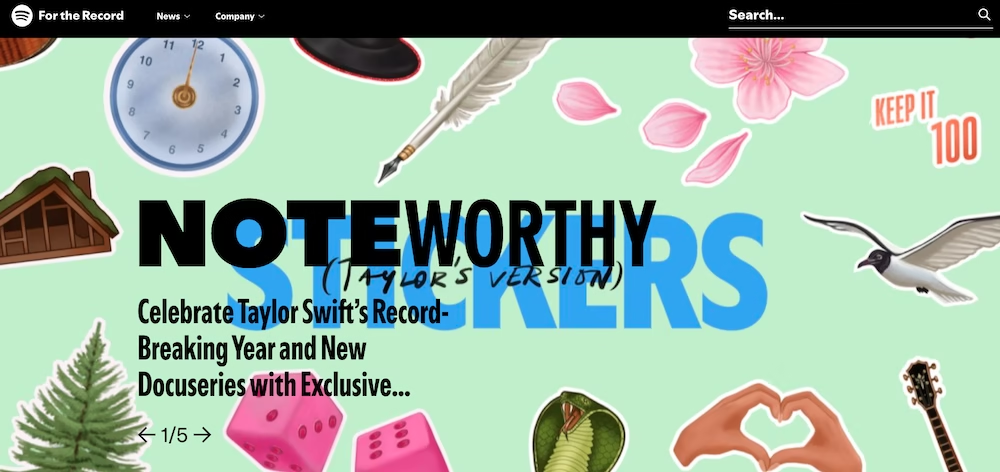
Spotify uses WordPress for specific sub-sites, such as their design blog or “Spotify for Artists” news.
The design is sleek and minimalist, in line with the app. WordPress themes here are fully custom-made (custom development).
View the Spotify Newsroom website here.
This is why Enterprises choose WordPress
The fact that large organizations choose WordPress is not by chance. These are the 4 main reasons:
- Scalability. With the right infrastructure, WordPress can handle millions of pageviews per day. The bottleneck is rarely in the software, but in the server configuration.
- Headless Capabilities. Via the REST API, WordPress can serve as a pure database. The frontend is then built in JavaScript frameworks like React or Vue.js.
- Open Source. Companies remain owners of their data and code. There is no “vendor lock-in” like with closed SaaS platforms (e.g., Wix or Squarespace).
- Ecosystem. There are enterprise-grade plugins available for nearly every integration, from Salesforce CRM to advanced SEO tools like Yoast.
This type of hosting you need for enterprise-level websites
To perform at this level, you certainly can’t rely on a standard hosting package. You will need to look for heavier options such as a VPS, Cloud hosting, or a dedicated server.
My.host is one of the few parties that offers these 3 types of hosting:
- VPS hosting. A Virtual Private Server offers an isolated environment on a physical server. Users have guaranteed computing power (CPU) and memory (RAM). This is ideal for sites that require more control and stability than shared hosting offers.
- Cloud hosting. Here, the application runs on a cluster of connected servers. If one server fails, another takes over immediately. This solution offers maximum redundancy and is easily scalable during unexpected visitor peaks.
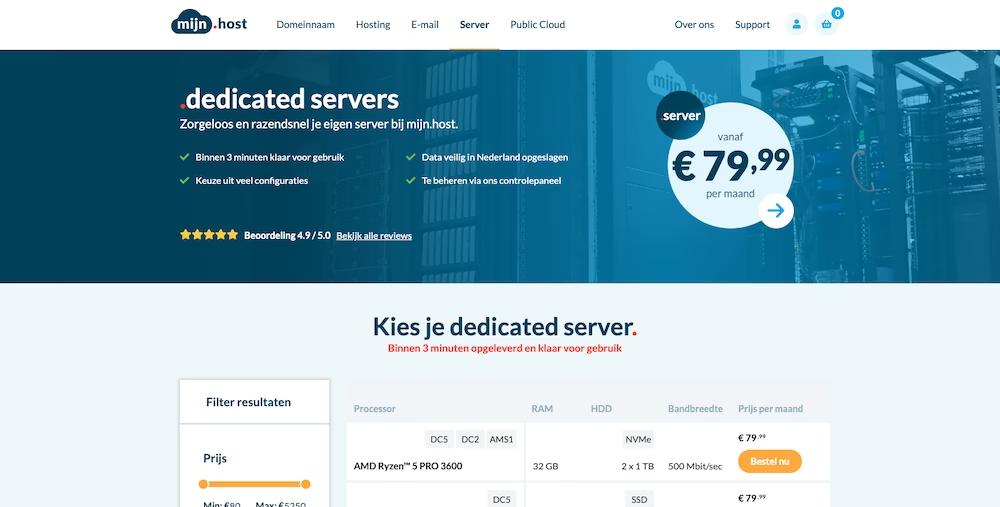
- Dedicated hosting. The entire physical server is reserved for one organization. No resources are shared with others. This type of hosting provides the highest possible performance and control, essential for heavy databases or specific security requirements.
Not sure which type is best for your website? Feel free to contact us.



Leave a Reply