


WordPress is used by approximately 43% of all websites. It’s not surprising then that numerous hosts (including my.host) offer WordPress hosting.
But what is WordPress hosting really? And how does it differ from “normal” web hosting? You will find the answer to these questions in this short article.
What is WordPress hosting?
WordPress hosting is a type of web hosting that is optimized for running WordPress websites. Simply put, it is a service where a hosting provider offers server space and technological infrastructure specifically tailored to the requirements of the WordPress platform.
What WordPress hosting exactly offers varies a little from provider to provider, but generally, it includes a 1-click WordPress installation, automatic updates, and a support team consisting of WordPress experts.
Different types of WordPress hosting
There are different types of WordPress hosting:
1. Shared WordPress hosting
With shared hosting, you share a server with other websites. This is the most affordable option and is suitable for:
- Beginning bloggers
- Small businesses
- Websites with relatively low traffic (up to about 50,000 visitors)
Advantages:
- Low cost (often between €3-15 per month)
- User-friendly
- No technical knowledge required
Disadvantages:
- Relatively limited resources
- Less control over the server environment
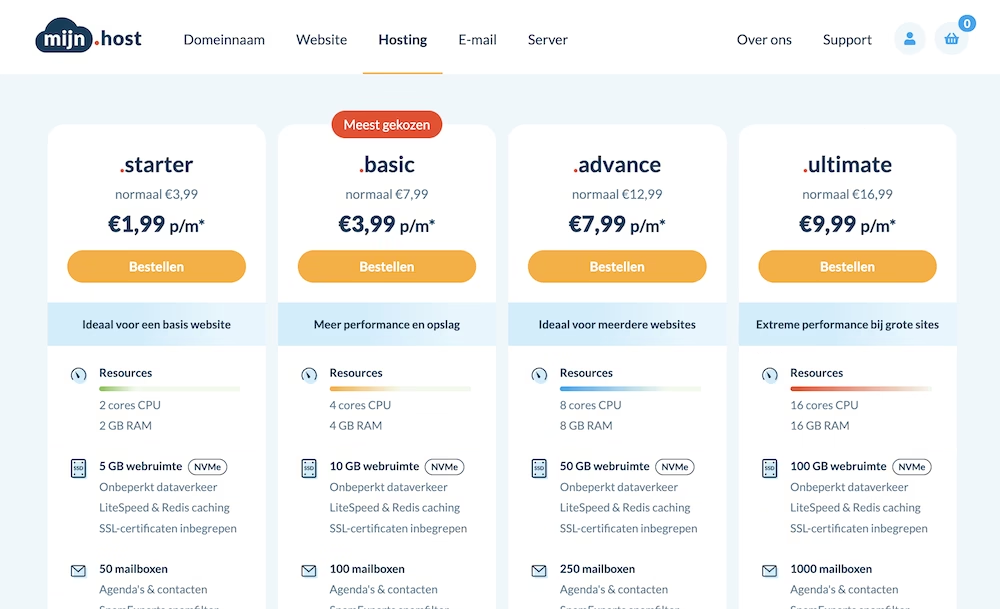
For a new website, this is usually perfectly adequate. At my.host, their standard web hosting and WordPress hosting fall under this type of hosting.
2. Managed WordPress hosting
Managed WordPress hosting is a premium, more expensive service where the hosting provider rolls out the red carpet for you:
Advantages:
- (Often) 24/7 support with a few minutes waiting time
- Multiple automatic backups per day
- A custom hosting dashboard
- Access to premium CDNs such as Cloudflare Enterprise
Disadvantages:
- Higher costs (€25-100 per month)
- Sometimes restrictions on certain plugins
For clarity: originally, managed WordPress hosting referred to hosting providers where you could only run WordPress sites and where you spent at least €25 a month on hosting. But these days, even budget hosting providers use the term, or providers where you can host any type of web hosting.
3. VPS (Virtual Private Server) WordPress hosting
A VPS offers a virtual environment that resembles a dedicated server (if you choose an unmanaged VPS at least), but at lower costs:
Advantages:
- More resources than shared hosting
- More control over the server environment (for an unmanaged VPS)
- Better performance and scalability
Disadvantages:
- Requires more technical knowledge (for an unmanaged VPS)
- More responsibility for security and maintenance (for an unmanaged VPS)
- Higher costs than shared hosting
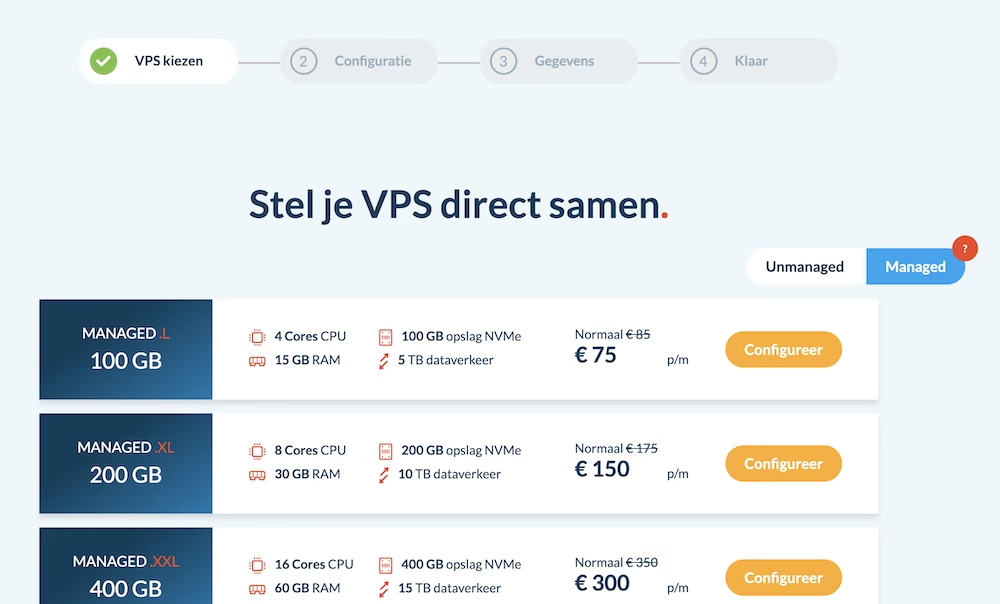
My.host offers both managed and unmanaged VPS hosting. If you’re not technically inclined or don’t have technically savvy people on your team, it’s best to choose the managed VPS option.
4. Dedicated WordPress hosting
With dedicated hosting, you have a full physical server at your disposal:
Advantages:
- The best possible performance
- Full control
- Highest level of security and privacy
Disadvantages:
- Most expensive option (often starting at €80 per month)
- Requires technical expertise
- Overkill for most WordPress websites
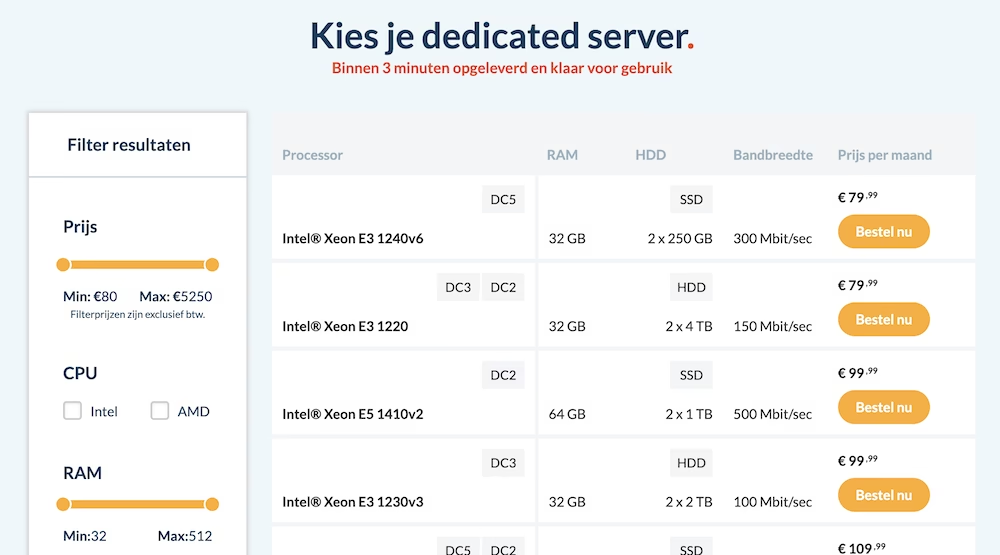
At my.host, you can get dedicated servers in all shapes and sizes.
Managed WordPress hosting – do you really need it?
Earlier in this article, we briefly discussed managed WordPress hosting. Looking at the origin of the term, this type of hosting was offered by providers that focused solely on WordPress hosting.
What exactly sets these specialized hosts apart from “standard” hosting services?
The main features of managed WordPress hosting:
- 100% focus on WordPress. Unlike traditional hosting, these providers offer a highly focused service solely for WordPress sites. You cannot install alternative content management systems like Joomla on it.
- Streamlined service delivery. These providers specialize in a single service. You don’t get options for domain registration or email hosting. You can only host your WordPress site(s) there.
- Very comprehensive support. We’re talking about 24/7 availability with virtually immediate response times usually not more than a few minutes.
- Self-developed dashboard. No standard control panels like cPanel or Plesk. These providers develop custom dashboards specifically aimed at WordPress website management. They often work a little easier but offer fewer options than regular dashboards.
- Exceptional performance. Sometimes you also get access to a service like Cloudflare Enterprise, which generally lies entirely outside the reach of individuals or cheaper hosting providers. Such a service offers little benefit if your traffic only comes from the Netherlands. But if you attract visitors from all over the world, it may be appealing.
If you have the budget for it and your site is large or rapidly growing, you might consider this type of hosting. But as a Dutch person with a Dutch website, you usually don’t need this type of hosting.
If you are in the process of launching your first WordPress website, I recommend taking a look at the standard hosting packages of my.host.



Leave a Reply