


Curious who owns a domain name, for example for purchase or to find out who is behind a website? This guide explains how you can find that information.
Additionally, we also provide valuable tips about WHOIS systems and how best to contact website owners for a domain purchase.
How to find out who owns a domain name via WHOIS
WHOIS is a protocol in the world of domain registration designed to disclose ownership information and other important details of domain names.
It gives you access to contact details of domain owners and registration data. Follow these steps to perform a WHOIS search:
Step 1: Choose a WHOIS lookup service
The first step is to select a reliable WHOIS lookup service. ICANN Lookup is a popular choice for this. However, there are other platforms available that offer similar services.
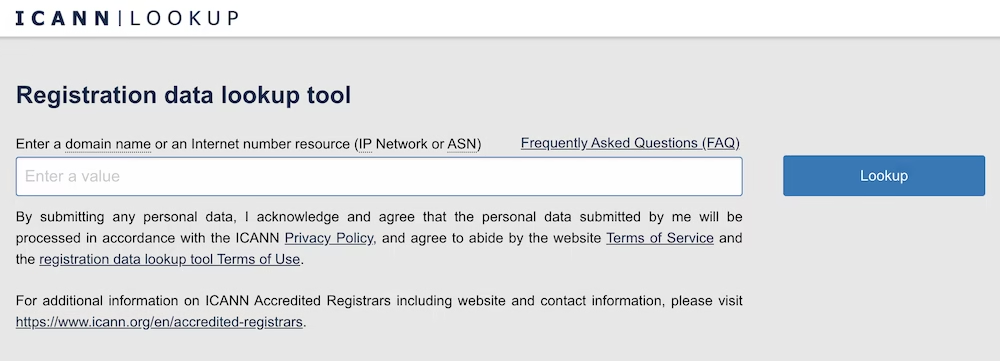
These services act as gateways to the WHOIS database, where all registered domain name information is stored.
Step 2: Enter the domain name
Once you have chosen a lookup service, the next step is to enter the domain name whose ownership information you want to discover. Be sure to enter the domain name correctly to get accurate results.
The lookup service will then consult the WHOIS database and fetch all available information about the specified domain name for you.
Step 3: Analyze the displayed information
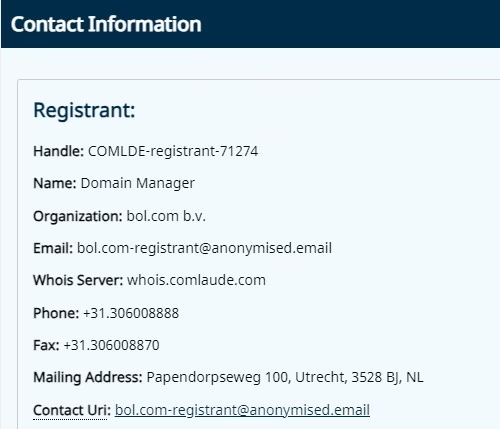
Once the search is executed, the WHOIS lookup service shows an overview of the available data about the domain name. This information can range from the owner’s contact details to the domain’s registration and expiration dates.
It is important to carefully analyze this data to get a complete picture of the domain owner and the domain status.
Challenges in using WHOIS
Navigating a WHOIS database can occasionally raise questions. While WHOIS should theoretically be easy to use, privacy laws and technical limitations mean that this process is not always straightforward. Consequently, you may experience the following two challenges:
1. Privacy protection and the GDPR
The implementation of the General Data Protection Regulation (GDPR) in the European Union has had a significant impact on the availability of personal data via WHOIS.
This legislation is designed to protect individuals’ privacy, meaning that many domain registrations now use privacy services to shield the owner’s data.
As a result, the WHOIS information you find may be limited and not contain the direct contact details of the domain owner.
2. Variation in TLD management
Another challenge is the variation in data available via WHOIS, depending on the organization managing the top-level domain (TLD). Not all TLD registrars offer the same amount of information; some are more transparent than others. It’s important to be aware of this variation and adjust your expectations accordingly.
Solutions
Despite these challenges, WHOIS remains an essential starting point for identifying domain owners. The above approach, combined with the use of additional research methods, gives you a good chance of obtaining the desired information.
SIDN
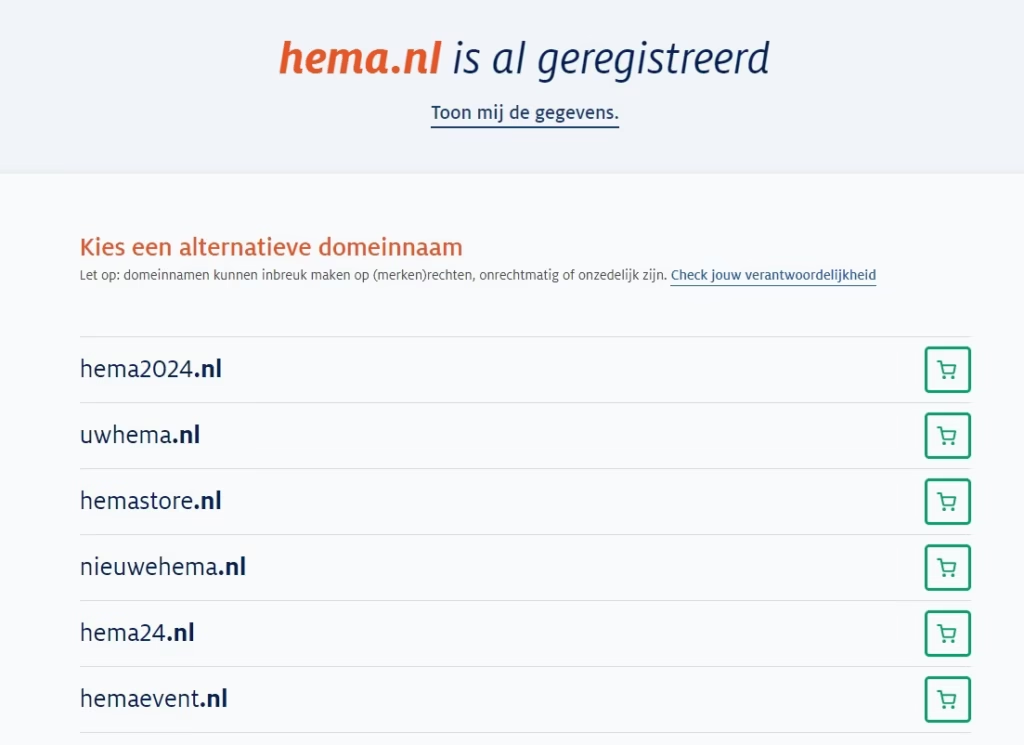
To find out who owns a Dutch domain name, you can often rely on SIDN.
SIDN is the Stichting Internet Domeinregistratie Nederland, responsible for managing .nl domain names. You use SIDN to uncover contact details of website owners.
Visit the SIDN website, enter a domain name, and gain access to the registration data. This is particularly useful if you have questions or comments about a specific website. Through SIDN, you quickly find the information needed to contact the domain name owner directly.
Alternative methods to identify the owner
If WHOIS or SIDN do not provide the necessary information, you can use the following alternative methods to identify the owner of a domain name:
- Social media and online tools: Many companies and website owners nowadays disclose their domain registration on their social media profiles or their website. A thorough search on platforms like LinkedIn or X could therefore potentially yield the desired results.
- Domain brokers: If you’re seriously interested in purchasing a domain, hiring a domain broker can be an effective strategy. These professionals often have access to networks and tools that you as an average person do not. Additionally, they are a suitable party to mediate in establishing contact.
- Legal avenues: In certain cases, such as legal disputes, it may be necessary to take legal action to reveal a domain owner’s identity. Use this method only as a last resort with the help of a lawyer.
These methods require more effort and sometimes financial investment, but can be successful when traditional routes like WHOIS fall short.
Why identify the owner of a domain name?
There are several reasons why you might want to know who owns a certain domain name.
- Domain purchase: The search for the perfect domain name may sometimes end at a domain that is already in use. In such cases, identifying the owner is necessary to open the door to negotiations. It offers you a chance to contact the owner directly and possibly reach an agreement on its purchase.
- Legal issues: Think of disputes regarding copyright and trademark rights. Knowing the domain owner is important in this case to address the correct parties and resolve any disputes.
- Technical notifications: Security breaches or technical problems are a common issue today. In these situations, it is important to be able to identify the domain owner to address these issues efficiently.
- Personal curiosity: Sometimes the drive behind wanting to know the domain owner is simply personal curiosity.
Legal considerations
When seeking the owner of a domain name, it is important to be aware of relevant laws and adhere to them. Unauthorized use of personal data can lead to serious legal consequences.
It is therefore important to be transparent about your intentions when contacting a domain owner. Additionally, it is essential to use any information you obtain in an ethical manner.
It is also important to be familiar with the laws and regulations applicable to domain registration and ownership in the domain owner’s jurisdiction.
This may vary depending on the country and the specific TLD. When in doubt, it is advisable to seek legal advice to ensure that your actions comply with the law.
Tips for Contacting the Owner
When you have identified the owner of a domain name and are ready to make contact, follow these steps for a professional approach:
- Be clear about your intentions: Begin your message with an introduction about who you are and why you are reaching out.
- Craft your message carefully: Whether you are interested in purchasing the domain or have other questions, ensure your message is professional and polite.
- Offer direct value: If you are interested in buying the domain, be prepared to substantiate your interest with a reasonable offer or proposal.
- Respect privacy: Keep in mind that some domain owners may want to keep their information private. Therefore, respect their wishes and approach them in a way that does not violate their privacy.
- Be patient: Give the owner ample time to respond. Not everyone checks their emails or messages daily. If you haven’t received a response after a reasonable period, you can send a friendly follow-up message. However, ensure you don’t come across as intrusive.
Domeinnaam bestellen?
Een goede naam zorgt voor een goede website.



Leave a Reply